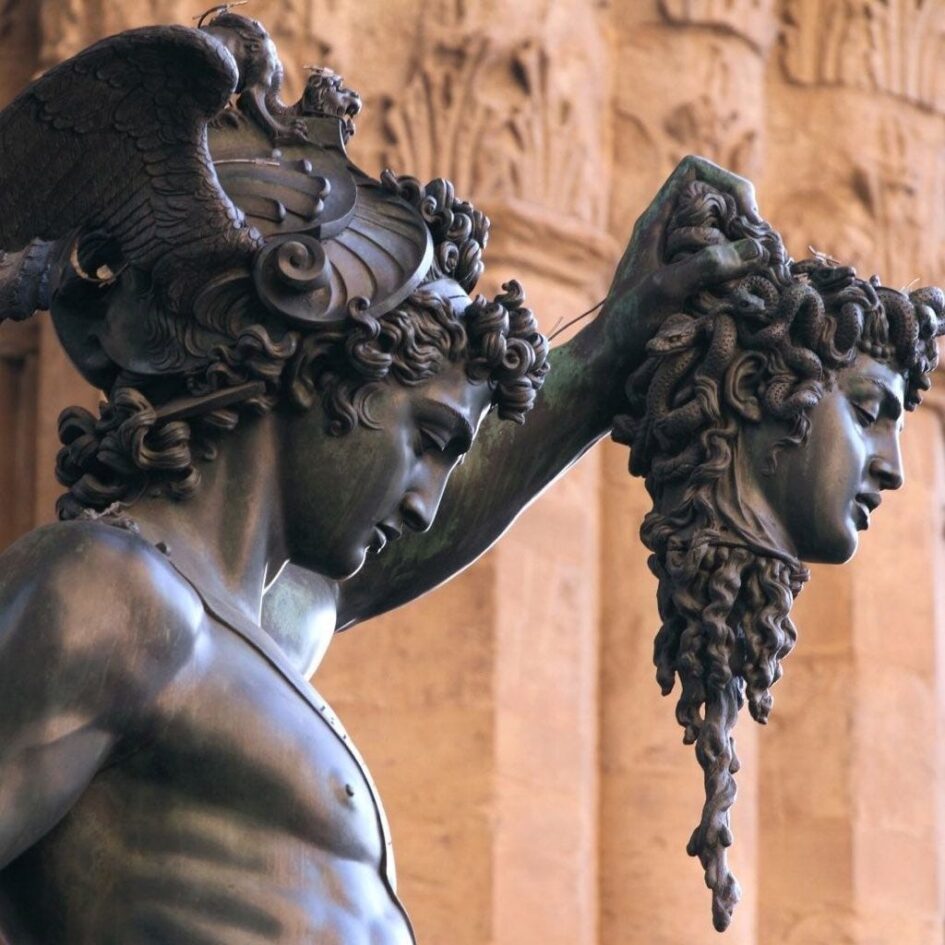
Always the terrifying and the beautiful, Medusa is eternal. An extraordinary woman with a terrible fate. The image of Medusa is one of the most iconic and enduring.
It has been thousands of years and honestly? She is as magnificent as ever. What an undying symbol and absolute legend. Hands down. Slay, girl. I’ve always loved her and I am not alone. Gianni Versace has being loving her since the long-gone 1993 when he chose her for his brand logo.
Nowadays, when someone asks you to name a famous monster? She is often top of the list with her snaky hair and stony gaze. But I am here to tell you that we have forgotten something that is integral to her nature – the word medusa, mέδουσα in greek means … guardian. There is always this duality to Medusa in greek sources – she scares or she protects, depending on who you are. Because in Greek art and mythology, the Gorgon is not simply a monster. She is terrifying and protective. Her image could frighten enemies away while simultaneously guarding the people who displayed it. Was she horrendously ugly or absolutely beautiful? Her story is actually a … sad one.
My fav Nietzsche once said – ” Strike the monster while it is still a monster. Once you understand its pain, your hand will begin to weaken.” Let’s get the facts straight and see how this could apply to Medusa:
- A gorgon is a monstrous female creature in Greek mythology.
- A gorgoneion was a greek amulet (or image) showing the head of a gorgon – people used it as a protective symbol against bad luck, evil spirits, and enemies.
- The gorgons have wings but they dwell on land.
- Their parents are sea creatures.
- Hesiod first wrote Medusa’s story during the Archaic period (800 – 480 B.C).
- Medusa is one of three sisters – strangely, the only mortal one of the three. Talk about drawing the short straw….
- We have different gorgon heads from different periods because their image changed over time:
- Oldest period: More monstrous image – with large mouth, protruding tongue and sometimes tusks.
- Later periods: More beautiful/human image with/without snakes in the hair.
- In some accounts, such as Ovid’s Metamorphoses (written about 1th century AD), Medusa was not born a monster but, in fact, very beautiful and admired for her lovely hair.
- Poseiden (yes, the one and only God of the sea) one day crept into the temple as Medusa prayed and had a non-consentual encounter with her (to put it mildly).
- Athena punished her, NOT Poseiden (excuse me?? I thought Athena was the goddess of wisdom???) and took her most gorgeous feature – her beautiful hair and turned it into snakes.
- Full punishment: The once beautiful woman ended up with a head of snakes instead of hair and a face that turned all those who looked at it into stone. So sad, isn’t it? A woman who has already been violated is transformed into something everyone else must fear. She would have to remain on her own forever, no love, no redemption, no nothing. Not even the basic eye contact.
- At the point of her death, (when killed by Perseus, while she was ASLEEP, the coward) she gave birth to two children from her severed head – the winged horse Pegasus and the giant Chrysaor. Guess who the dad is.
- Her blood will turn out to be amazing (like her) and have both healing and killing power. Athena will take two drops and give them to the God of Healing (Asclepius) because guess what? It can BRING YOU BACK FROM THE DEAD! Medusa has always been the monster who could save people. How is that for a duality?
There is no evidence in the ancient sources that Medusa kills anyone while she is alive.
Who’s the villain now???
Not Medusa. She was awesome.
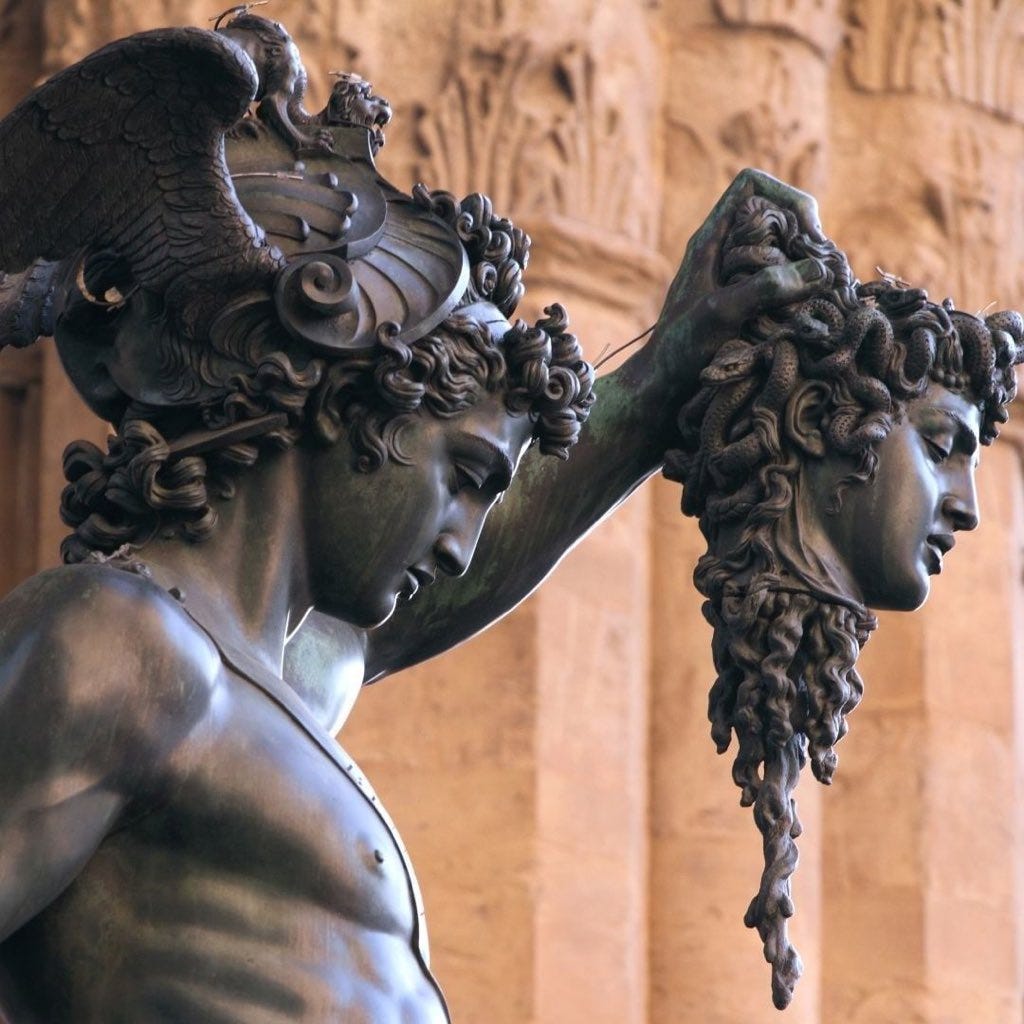
When Medusa died however, her head was still potent and useful – Perseus killed several people and monsters using it as a weapon of mass destruction. For example, he turns Atlas into the Atlas mountains, he petrifies a whole island full of people who’ve annoyed him and he turns everyone at his wedding into stone.
Having killed no one while she was alive, Medusa is used to kill hundreds of people after her death.
perseus did that
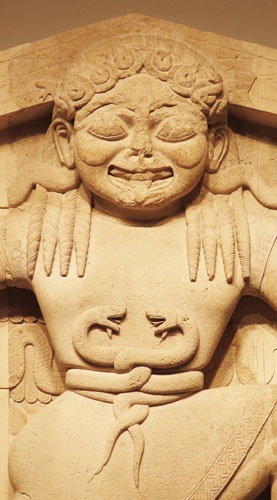
2600 years ago, people built the oldest greek stone temple we know! Yes, it is the same Temple of Arthemis on the island of Corfu with the depiction of Medusa from above. At around 2.79 metres high, this is by far the largest ancient Gorgon figure yet discovered. See it in all its glory:
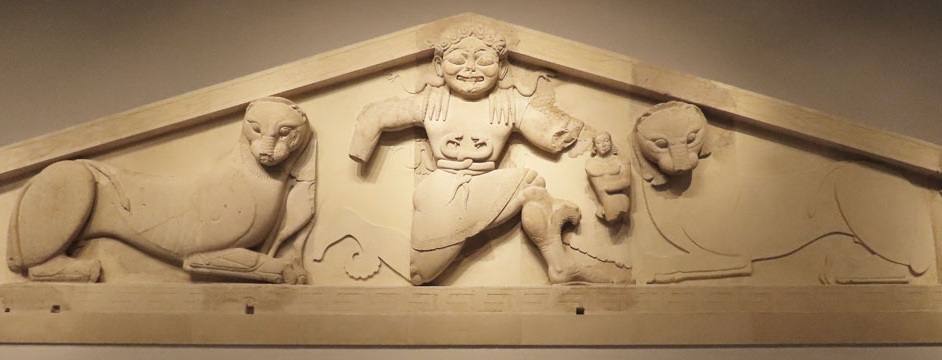
FYI, Artemis is a strage, wild goddess, the queen of wild creatures… Therefore, it is no suprise that Medusa appeared above the entrance to her temple. Like calls to like.
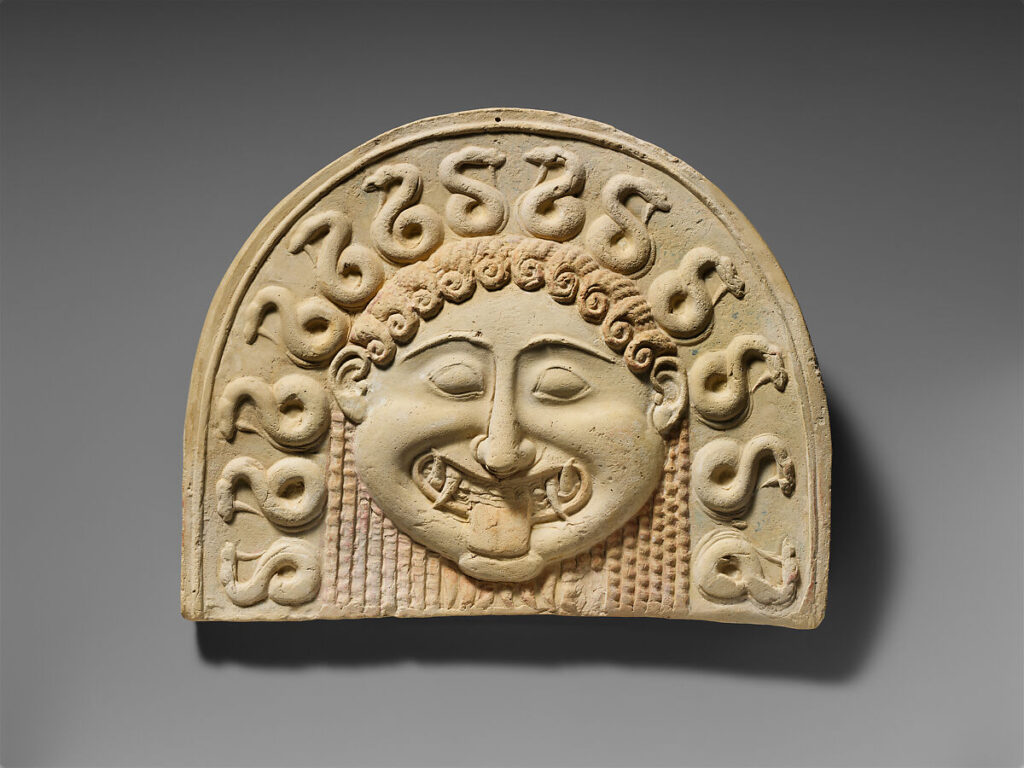
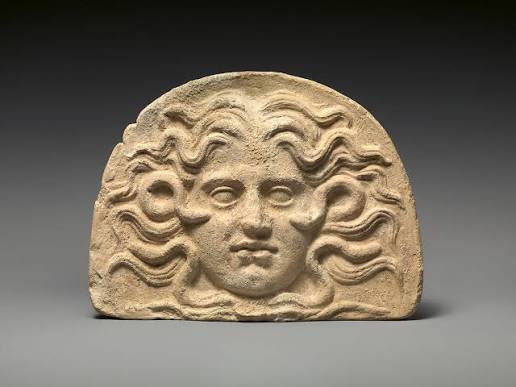
No matter what face she wears, her story is a tragic one.
Was she really a villain or was she just a victim? Were all villains once victims of something/someone? What do you think, dear reader?
Medusa is exactly the kind of figure that makes you question who the monster actually is.
What I know for certain is that it is certainly easier to dehumanize Medusa, then to acknowledge her pain.
Killer.
Protector.
Monster.
Victim.
Guardian.
Medusa contains all of these contradictions at once. And perhaps that is why she has survived for thousands of years.
Because we keep changing the way we see her.
Who’s the villain now? Not so simple, is it?
Not Medusa.
Never just Medusa.
Recent Comments