We’ve all heard the name. We’ve all read a quote or two. But have we actually tried to understand the man and his ideas? Who was he? What was he like? What did he do? Why did he say the things he said? Do we even understand what he said?
Nietzsche is a lot like the ocean. Or like a storm. Can’t really decide. Deep, vast, turbulent, relentless, mysterious and … dangerous. It’s an odd thing, when a storm has passed, leaving the weather once again calm. But it’s wrecked everything in its path. And that’s okay. Because Nietzsche is one of those people that can change your life because he can change your perspective.
We can claim all we want that we “understand” and “know” but there are some things that we cannot really put our finger on and say with complete certainty – that’s it. It will simply be forever out of reach, out of our grasp and understanding. But we can try. And this post is about trying. Reading Nietzsche can feel like being roasted by someone who’s also trying to save your soul. One minute he is telling you to become who you are, the next you are wondering if you’ve ever had an original thought in your life. And yet, somehow, he’s still weirdly motivating.
So, let’s try to see the man first.
- Nietzsche came from a long line of Lutheran ministers (father, grandfather).
- His family were Protestants to the bone. All big believers.
- Studied Theology and Classics and became a brilliant professor in Basel, Switzerland.
- FYI, Nietzsche had NOT completed his doctoral thesis or the additional dissertation required – he was simply that cool and exceptional. Mind you, not all is lost, there still might be time for you to shine! Or not.
- Eventually, he left the University to live in solitude and write! Not that bad if you ask me.
- He fell in love with his friend Lou Salome and she broke his heart.
- He proposed to Salome three times; She always declined;
- This was perhaps the most significant relationship with a woman he had ever experienced (other than the extremely conflicted relationship with his sister)
- The pain it caused influenced Nietzsche and contributed to his ever-deepening depression and isolation.
- By his mid-40s, Nietzsche began his lifelong battle with mental illness + he was half-blind, in unrelenting pain most of the time.
- By the 1890s, he became internationally known, although he knew nothing of success.
- Nietzsche was an open Atheist.
- Nietzsche hated what Christianity had done to the world – for him, it zapped it of its greatness.
- Nietzsche spent the last 11 years of his life in total mental darkness, first in a Basel asylum, then under his mother’s care until her death, and at last in his sister’s care when in 1900, at the age of 56, he died.
- Nietzsche was committed to teaching us how to live life to the fullest –for him, this is best done in a godless, meaningless world! Now take a deep breath….. inhale……exhale…… No one is saying that you should agree. Just keep an open mind.
“Of all that is written, I love only what a man has written with his own blood.”
Nietzsche
Now that I’ve set the main lead character let’s see the plot twist. I would say that the biggest twist is the association of Nietzsche’s name with Hitler and fascism. Talk about dragging your name through the mud here.
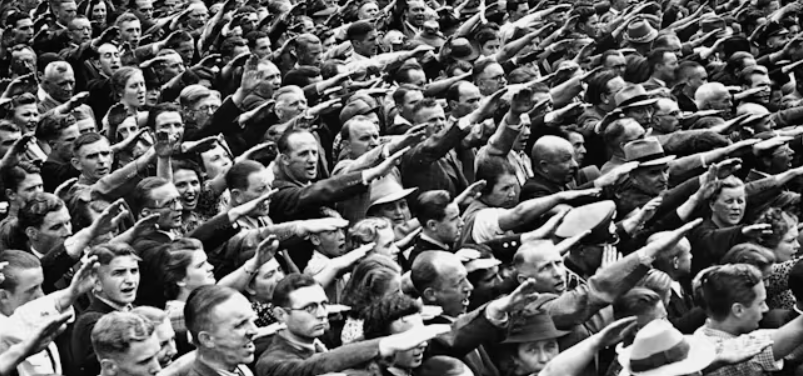
But you should know by now that the villain doesn’t usually look like a villain. It is also the one you least expect. So when the plot twists and you discover the seemingly benign character you trusted is the one actually pulling the strings you are left with your mouth wide open in shock.
In Nietzsche’s story, his sister Elisabeth Förster was the one with the strings. The “one behind the curtain“. The one who used her brother’s ideas to fit her own agenda. She went as far as to abuse his writings after his death and add on bits of little crumbs that were to eventually lead the public to Nazism. And she was successful. The public mind was deluded and for some time after WW2, the dislike of Nietzsche’s name stung like salt in a never-closing wound.
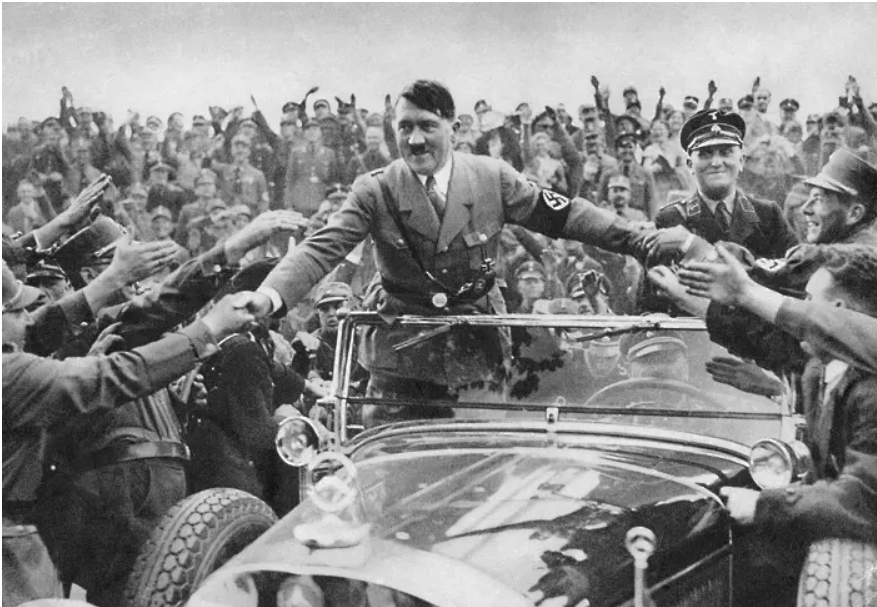
Now READ that AGAIN.
What exactly did Nietzsche say?
1. He had an issue or two with Christianity and democracy.
Just follow the chain:
Christianity says that everything in this world is LESS important than that of the “next” after death —> it says we should turn away from what seems important in this life, and try to transcend it —> but in doing this we turn away from life itself —> Christianity’s idea of “man” undermines us —> We must SURPASS this limiting idea —> And besides…
God is dead.
Nietzsche
Friedrich Nietzsche claimed that Christian morality is a reflection of the wretched and oppressed position of the Jews and early Christians under Roman rule. For Nietzsche, Christianity replaced Master Morality with Slave Morality. He noted that ancient Greek and Roman societies were all master moralities. It encouraged us to be unequal, warriors, and rise above the weak, stupid, and meek. The Jews were once slaves and therefore Judaism was a religion for the slaves. The same goes for Christianity and democracy: like the domino effect – one leading/following the other.
The Romans & Pre-Socratics Greeks followed their Natural Instinct:
GOOD was: strong, assertive, individualistic, bold, powerful, and vigorous
BAD was: the weak, timid, sacrificial, and passive
In other words, the slave morality is to be caring and sensitive to all — place others first, don’t be selfish—be meek, help the less fortunate—sacrifice. For him, this is how a good slave was to act. Don’t be strong, assertive, or selfish, work in the service of others, not yourself. Those who do not, are going to hell and are evil. He felt that under threat/fear of divine justice, forced men to value Humility, not Pride, Equality, not Individualism, Timidity, not Aggression, and Others, not Themselves.
He thought that Christianity created mediocrity and that it shackled great men to the mundane and average. For Nietzsche, the democratic movement is the “collective degeneration of man“.
The result, according to Nietzsche, is that Christianity becomes a religion that preaches weakness and hatred toward the values of the world—so much so that Christian ascetics took to whipping themselves, living as hermits, and denying themselves the pleasures of food and drink. This, in Nietzsche’s view, is why Christianity preaches that we should deny the value of this world and view the pleasures of the body as evil;
To sum up, his idea is that Christianity is based on the resentment of slaves toward their masters, and this slave mentality continued even after Christians came to dominate Europe.
2. His “Will to Power” concept
One of his most complex concepts as it was never systematically defined in his works, leaving its interpretation open to debate. OPEN to some BAD and WRONG interpretations. Also, OPEN to exploit. To be taken advantage of. To be USED and abused. Remember the plot twist we talked about? This is the part that gets twisted. Remember the villain that you would never expect or suspect?
THE SISTER. The dear sister. With the fascist ideas and a Nazi husband. By the way, Nietzsche did not attend their wedding. Dwell on it. FYI, that same husband created a “pure Aryan settlement” in Paraguay and actually persuaded fourteen German families to join them in the colony they romantically called Nueva Germania. In case you are wondering – the colony did not thrive and the HUSBAND committed suicide by poisoning in 1889. The SISTER would then return to Germany only to find her brother an invalid and to take a leading role in promoting her brother, especially through the publication of a collection of Nietzsche’s fragments under the name of The Will to Power. She promoted him all right. But in a way to fit her own agenda. And she was relentless. Hitler would later attend HER funeral in 1935.
Let’s quickly do the maths here – Nietzsche died in 1900 so there were no World Wars yet – not WW1, nor WW2, and his sister outlived him by 35 years! She became a Nazi when it was fashionable to be one. Also, while we are walking down memory lane, remember that doing science and being a scientist reached a turning point with Charles Darwin’s theory of evolution (1859), which threw into doubt the idea of the universe as God’s creation! Nietzsche would have been a teenager.
It has to be said that Nietzsche was fundamentally concerned with exercising power over oneself, NOT over others. Read that again. Now think looong and careful what Fascism/Nazism is about.
Look at what he wrote: "I have found strength where one does not look for it: in simple, mild, and pleasant people, without the least desire to rule—and, conversely, the desire to rule has often appeared to me a sign of inward weakness: they fear their own slave soul and shroud it in a royal cloak (in the end, they still become the slaves of their followers, their fame, etc.) The powerful natures dominate, it is a necessity, they need not lift one finger. Even if, during their lifetime, they bury themselves in a garden house!"
Nietzsche is very famous for saying “God is Dead.” He thought that God would Die once men realized that they’ve created God – not vice versa. And with God’s death, also comes the death of all Universal ideas and Truths. How would God die you might ask? According to Nietzsche – with Science. It will kill God and our belief in Absolutes. Oooookay this is intense so what would happen after that?
The Death of God would liberate people – For some, God’s death is a glass half full! It is a great opportunity to do great things! A godless, meaningless world is … FREEDOM! Life becomes a blank page for us to write our own life story, not a coloring book in which we have to stay in the lines.
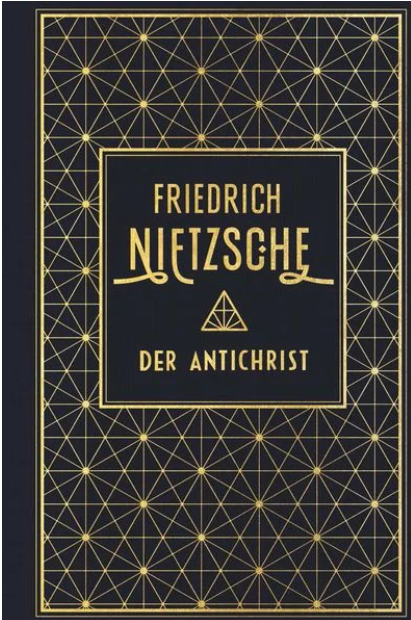
So to SUM it UP:
God’s death gives us Liberation:
1) from guilt
2) to be creative
3) to construct one’s own horizon
4) to follow your own Will to Power
And what is this Will To Power?
The Will to Power was not a text completed by Nietzsche, but rather selections from his notebooks misinterpreted to be something they are not. The will to power is one of Nietzsche’s most misunderstood ideas. For Nietzsche, it is man’s internal drive for greatness and creativity. For centuries, it has been suppressed by Christianity –it is the voice in our head/heart that tells us to strive to rise above the masses (not take care of them) and to master everything! But it is not about ruling the masses – it is about ruling yourself. Becoming the best possible version of YOU. This is why I will repeat myself – Nietzsche would have hated Hitler. His leading, his small ideas, his nationalism. Everything about him.
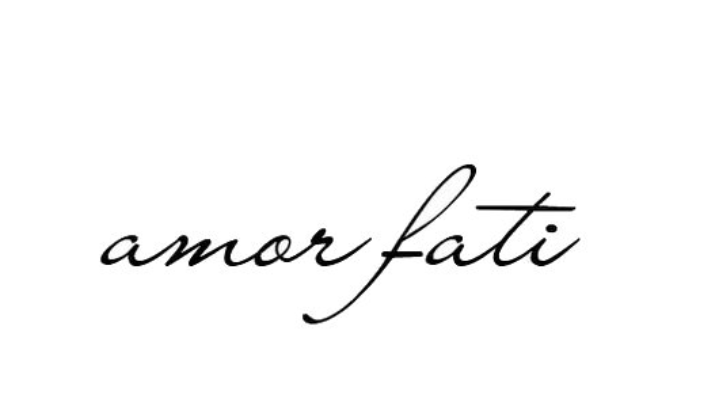
“My formula for greatness in a human being is amor fati: that one wants nothing to be different, not forward, not backward, not in all eternity. Not merely to bear what is necessary, still less conceal it … but love it.”
Friedrich Nietzsche
Closing Thoughts
Was Nietzsche giving us another Truth? No. And sometimes that could be more valuable in itself.
He is giving us his perspective—not Truth:
Here are the top 10 of Nietzsche‘s ideas:
1. Perspectivism—all social truth is subjective
2. Arguing against the ideas of benevolence, brotherhood, charity, and pity (for who has ever questioned those?)
3. Amor fati – love your fate = your life as it is;
4. Create meaning in an indifferent universe;
5. Having the freedom to live in a meaningless world;
6. The thought experiment of the Eternal Recurrence – to serve as a test of one’s life choices and values;
7. Follow your “Will To Power”—think outside the Social Box
8. Conventional morality will stifle individuality and creativity
9. Suffering is an integral part of the human experience and a catalyst for growth. Transcending it would lead to greater strength!
10. Don’t be part of the herd — make your mark on history!
In conclusion, Nietzsche’s ideas were never meant to make you comfortable. They were meant to make things interesting. And possibly to judge your life choices from beyond the grave – but in a thoughtful way.
Recent Comments