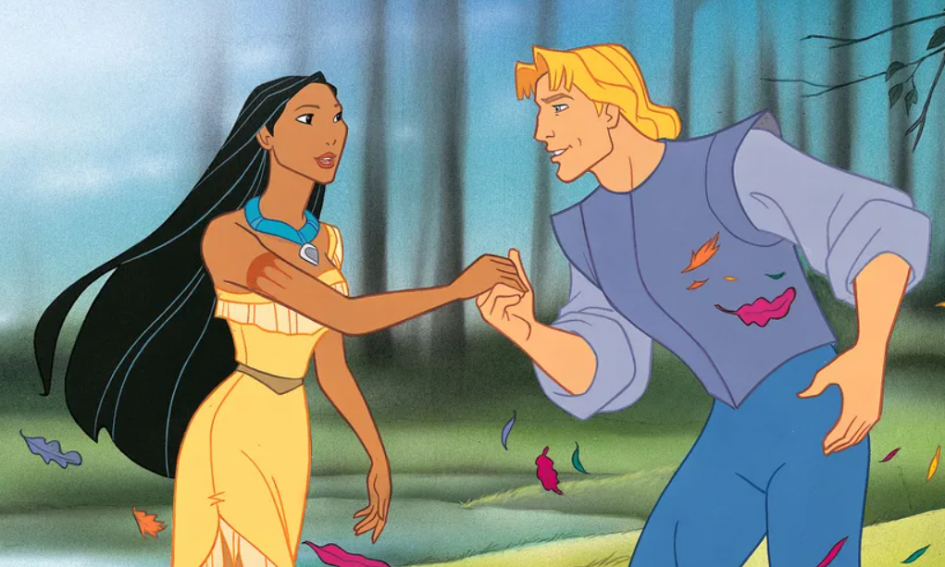
I am a 90s kid and growing up with Pocahontas made me fall in love with these characters and their story. It was inevitable. Researching them some 20 years later made me appreciate them all over again. This blog post is about one truly remarkable guy, John Smith. They don’t make ’em like that anymore, I am telling you. Truth be told, I want to be John Smith when I grow up. Why? Read along.
I will skip the part where America was discovered (1492) (read my blog post about the myth of Christopher Columbus) and simply say that the important year here is 1607, as it marked the beginning of what turned out to be an earth-shattering, ground-breaking experiment. This experiment would, in the long run, lead to democracy and a government dedicated to liberty and the pursuit of happiness. Or in short, the US.
1607 was the year when the English settlers came to the New World to stay and created the first settlement and colony, Jamestown. Please keep in mind that during that time, the Englishmen thought of the Indians as savages. Vice versa, the local Indians knew about white men, and they didn’t want them around. Why would they?
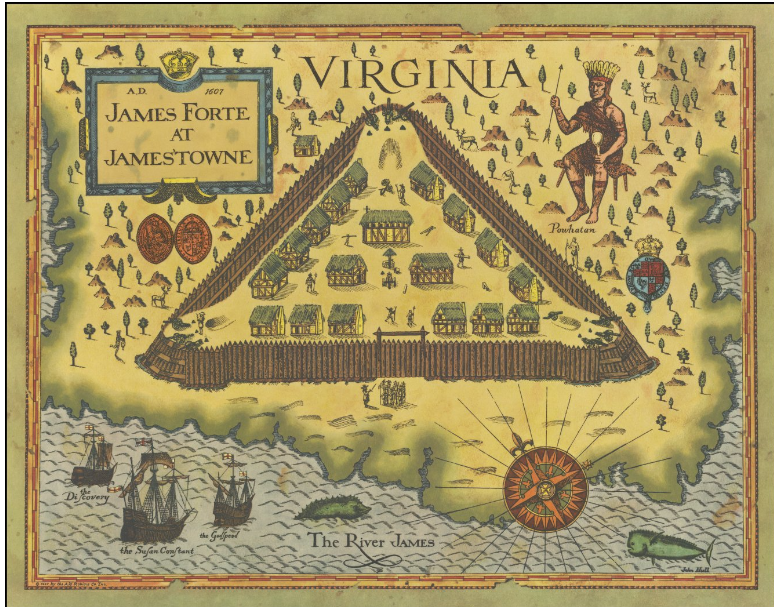
As it later turned out, the settlers couldn’t have picked a worse spot. The land was swampy, full of mosquitoes, and the drinking water was bad. It was very cold during the winter and hot in the summer. Their first two leaders were incompetent, which meant they were barely hanging in there. All were men, they brought no women. What were they thinking, right? And remember! Most were gentlemen, with no training or taste for work. There wasn’t a farmer among them. It was gold that was on their mind, and they expected to find it at their feet. Gold, gold, gold, gold, GOLD, GOLD, GOLD, GOLD, GOLD, GOLD, GOLD, GOLD, GOLD, GOLD, GOLD (I can be annoying, I know) GOLD, GOLD, GOLD, GOLD, GOLD, more GOLD and in case I wasn’t clear enough: GOLD! Too bad there wasn’t any, and what they got instead was BAD LUCK. Lots and lots of bad luck.
Typhoid fever killed many of them. The dysentery germs in the tidewater made others sicken and die. The Indians killed others. Some starved. Fewer than half of them survived the first year.
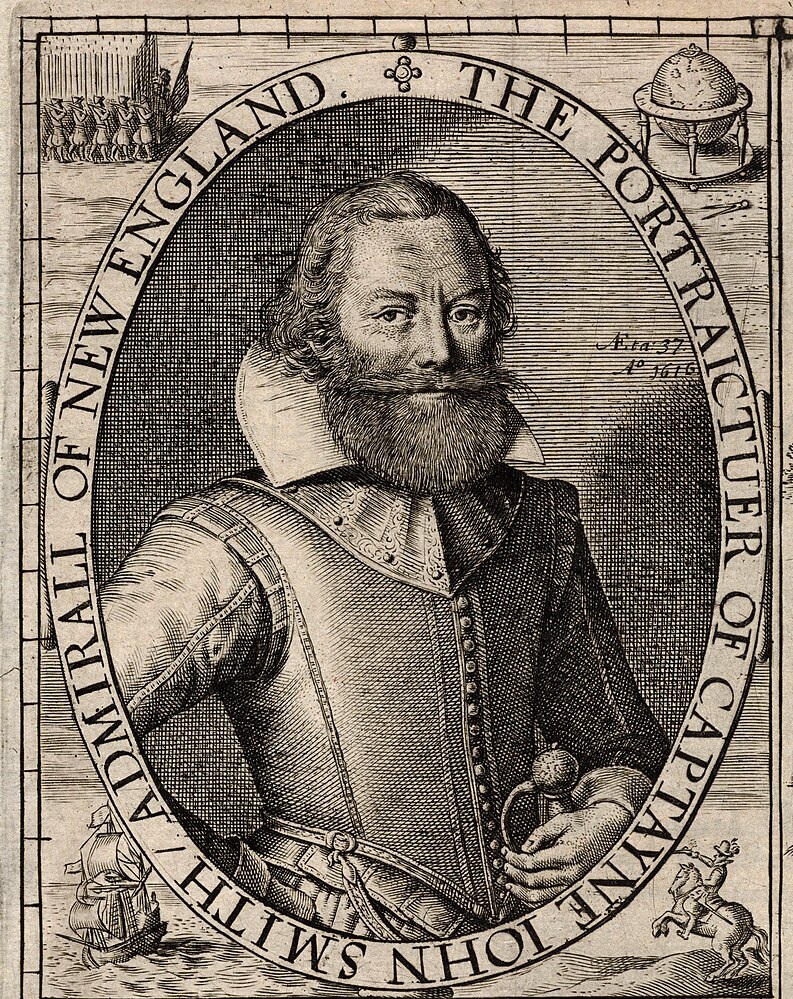
One man, more than any other, helped make things go right. Inserting the hero <John Smith> here. New level unlocked. He was short, red-bearded, feisty, not liked by many of the voyagers, but a born leader who became Jamestown’s third president. Read along.
John Smith
John was a tough, no-nonsense man who worked hard and expected everyone else to do the same. Some people admired him; others hated him, but they recognized he was a leader. He was not a gentleman. He was of yeoman background (a yeoman was a farmer who cultivated his own small land), but he himself did other things with his life. He understood that there was more to be gained in the New World than gold. He was 28 when he took over the leadership of the Jamestown colony, and things were not looking great. Smith forced the colonists to grow crops, catch fish, and perform military drills, announcing his new rule, “He that will not work shall not eat. (except by sickness he be disabled).” Did the gentleman hate that? Absolutely. With a passion. But everyone wanted to eat. So everyone worked. John Smith literally saved the colony. He traded with the Indians, got food from them, and learned the ways they hunted and fished. He respected them and they respected him. They called him “werowance”, or chief, of Jamestown. And that was what he was.
I cannot begin to fit the life and adventures of this amazing person in a single post so let’s see what else he did in his youth simplified:
- In 1600, he went off to Hungary to fight the Turks in the “Long War”
- He was granted a coat of arms with 3 Turks’ heads on it to celebrate his victories (and the heads he supposedly chopped off);
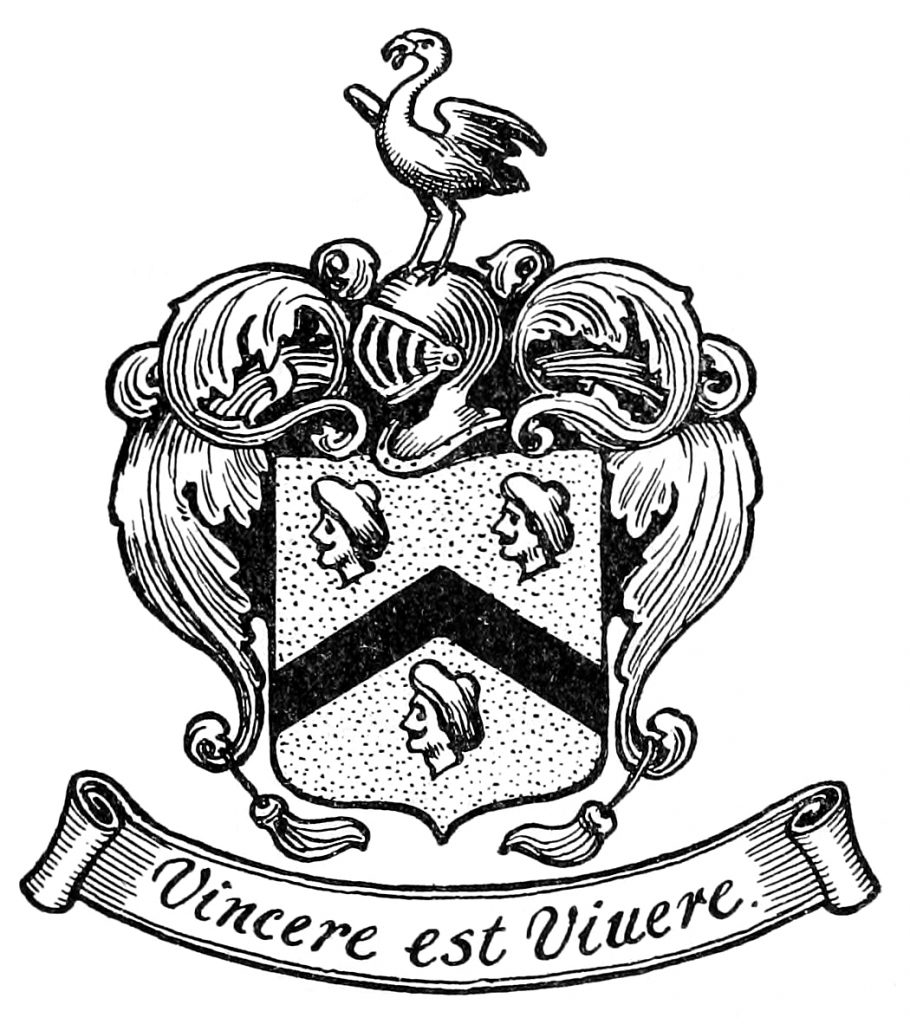
- He was made a Captain.
- In 1602, he was captured and sent as a slave to Constantinople, where he was given to a Turkish woman as a gift. Talking about next-level gifts, huh? And now we are simply given flowers …. I would rather receive a John Smith, thank you very much. This is a joke, I am not a fan of slavery (you can check out my Humanity vs Business post if you would like to know more about it) Anyways, the woman would later sell him off, and he would come to kill his new master, escape, and wander through the territories of modern-day Russia, Poland, and Germany doing all sorts of great things, and end up in North Africa fighting pirates. Pretty cool, right?
- John not only explored and mapped Virginia but also charted the New England coast from Cape Cod to Maine.
- His relationship with the Indians can be simplified like that: Sometimes, the Indians entertained Smith with feasting and dances; other times, they tried to kill him.
- Once he was brought before an Indian werowance and he expected to die; But he pulled out his compass, showed how it worked, talked about the earth and heavens, and soon had a tribe of friends; Clever, clever man.
- Another time, he was taken to the great Powhatan, who was ready to smash his brains out with a club, but Pocahontas came to save him;
- By the way, Pocahontas admired him and saved his life twice. I know what you think. Yeah, Disney lied to us again and showed us a different picture – the one of love. Sadly, this is more of a myth but hey, I am not a myth-buster so I will leave it at that – they had a complex relationship. Who knows what really was in their hearts?
- Eventually, Smith came to be respected and was adopted by the Powhatan tribe;
- In 1608, while exploring the Chesapeake Bay, he was stung by a deadly stingray and almost died. He even asked for his grave to be dug – he was sure he was a goner this time. There is nowadays a village called Stingray Point in Virginia, which got its name because of that accident.
- John explored an estimated 3,000 miles (4,800 km) in the Chesapeake Bay region. His explorations are commemorated in the Captain John Smith Chesapeake National Historic Trail, established in 2006.
- In 1609, John was asleep in his boat when some gunpowder exploded and “it tore the flesh from his body and thighs nine to ten inches square…To quench the tormenting fire, frying him in his clothes, he leaped overboard in the deep river, where he was near drowned.”
- Smith was so badly wounded that he had to return to England. At that time, Pocahontas was told he was dead. Smith will see her again 7 years later, in 1616, when she will travel to England with her husband John Rolfe and their son, Thomas.
- John Smith never got back to Virginia.
- He did get to New England, which he named and mapped.
- He wrote many books and became famous because of them, like “A Map of Virginia. With a Description of the Countrey, the Commodities, People, Government, and Religion (1612), The Proceedings of the English Colonie in Virginia (1612), A Description of New England (1616), New Englands Trials (1620), The Generall Historie of Virginia, New-England, and the Summer Isles (1624), A Sea Grammar (1627), “The True Travels, Adventures, and Observations of Captain John Smith” (1630), etc.
- He died on June 21, 1631, following an illness, aged 51.
- According to documents, Smith never married or fathered any children. However, Smith did claim to have “children”—England’s New World colonies. Who needs children when you can have that, huh?
Cats are supposed to have nine lives. John Smith was most definitely not a cat but somehow he had even more. And I dare say, he lived each one to the fullest. What a man. What a MAN. You cannot fit him in any box. He is not mass produced. He is not endangered species. More likely extinct. Yeah, that must be it. There is no other like John Smith.
Recent Comments