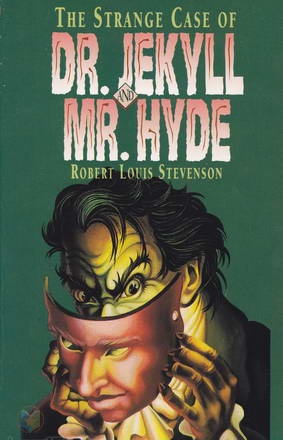
I will start this post with a quote from the great book The Strange Case of Dr. Jekyll and Mr. Hyde by R. Stevenson, first published in the 1886 – “All human beings, as we meet them, are commingled out of good and evil.” Well, he couldn’t have been more right.
People are complex creatures and I believe that we should always present them as such. The unrealistic portrayals of endless virtues and great qualities are just meaningless.
As you might imagine, the impact of the book was huge even back in the 19th century. Today, it has become a part of the language, with the phrase “Jekyll and Hyde” to refer to people with an unpredictably dual nature – outwardly good, but sometimes shockingly evil. I feel that in the case of the famous Christopher Columbus It would suit him perfectly. His character was rather ambiguous and his personality – a myth.
The purpose of this post is to objectively write about the exploration of America and the person behind the myth of the “great” Christopher Columbus. I would like to ask and answer questions in search of the truth that is sometimes unexpected and inconvenient. Let us look for both Dr. Jekyll and Mr. Hyde in Columbus’s personality.
The facts are:
- Almost everything that is written about Columbus in most history textbooks is either wrong or unverifiable.
- Columbus was so pivotal that historians use him to divide the past into epochs, making the Americas before 1492 “pre-Columbian”.
- People from other continents had reached the Americas many times before 1492. This is already a proven fact. Take the Norse explorer Leif Erikson as an example. He reached America five centuries before Columbus.
- In a sense Columbus’s voyage was not the first but the LAST “discovery” of the Americas.
- Many aspects of Columbus’s life remain a mystery. He claimed to be from Genoa, Italy, and there is evidence that he was. There is also evidence that he wasn’t – Columbus didn’t seem to be able to write in Italian, even when writing to people in Genoa. He wrote only in Spanish. Some historians claim he was from Corsica, Portugal, or elsewhere. One textbook tells us he was poor, “the son of a poor Genoese weaver”, while another assures us he was rich, “the son of a prosperous wool-weaver”. Each is certain, but people who have spent years studying Columbus say we cannot be sure.
- We do not know for certain where Columbus thought he was going. Evidence suggests he was seeking India, Japan and Indonesia.
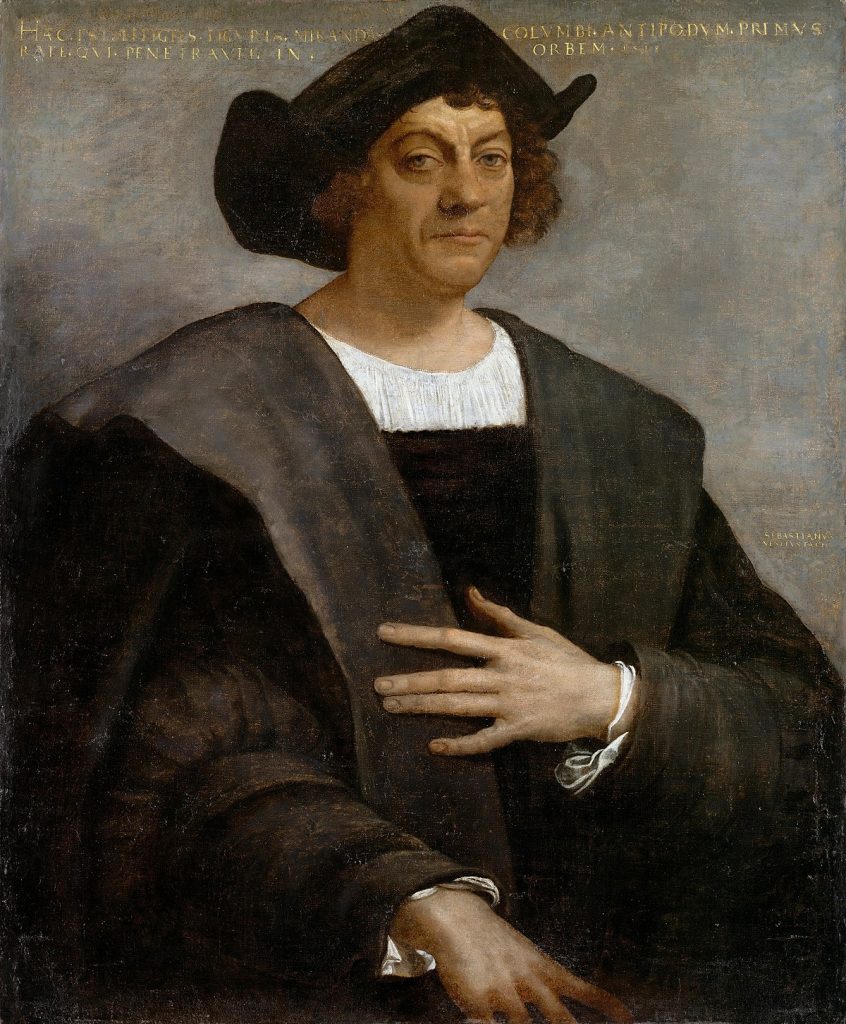
- The head-and-shoulder pictures of Columbus that can be found in Internet and in many books have no value whatsoever as historical documents, because not one of the countless images we have of the man was painted in his lifetime. In total, we have around six different Columbus faces.
- In Columbus’s time all educated people and most sailors believed that the earth was a sphere. Columbus did NOT prove the world round.
- Columbus’s own journal shows clearly that he KNEW he had reached a NEW continent: “I have come to believe that this is a mighty continent, which was hitherto unknown”, he wrote. “I am greatly supported in this view by reason of this great river and by this sea which is fresh.” (the coast of Venezuela, Orinoco river)
- There was no bad weather – Columbus’s own journal reveals that the three ships enjoyed lovely sailing.
- The voyage across the unknown Atlantic took one month. Not two or three.
- How Columbus treated the lands and the people he “discovered” is often not mentioned. Most authors that are writing about Columbus have no interest in telling what he did with the Americas once he reached them – even though that is perhaps the more important half of the story.
- Columbus wrote in his journal on October 13, 1492: “At daybreak great multitudes of men came to the shore, all young and of fine shapes, and very handsome. Their hair not curled but straight and coarse like horse-hair, and all with foreheads and heads much broader than any people I had seen. Their eyes are large and very beautiful.” However he ended his description of them with these words: “I could conquer the whole of them with fifty men, and govern them as I pleased.”
- On his first voyage, Columbus kidnapped American Indians and took them back with him to Spain. Only seven arrived alive.
- When Columbus and his men returned to Haiti in 1493, they demanded food, gold and sex from the natives. To ensure cooperation, Columbus used punishment by example. When an Indian committed even a minor offense, the Spanish cut off his ears or nose.
- Since Columbus didn’t discover gold, he had to return some kind of dividend to Spain. In 1495 the Spanish initiated a great slave raid. Columbus not only sent the first slaves across the Atlantic, he probably sent more slaves than any other individual.
- The slave trade and the new diseases destroyed whole American Indian tribes.
- There are records that Columbus and his men have abused children younger than 10 years old.
- “What we committed in the Indies stands out among the most unpardonable offenses ever committed against God and mankind and this trade as one of the most unjust, evil, and cruel among them.” Bartolome de las Casas
- Every 12th of October in America people celebrate the Columbus day. The big question is: Should they?
- You can be a good navigator, a great plunderer and a monster at the same time. People are complicated creatures.
In conclusion:
Christopher Columbus introduced two phenomena that transformed the modern world:
The taking of land and wealth from indigenous people in the Western Hemisphere, leading to their near extermination and the transatlantic slave trade.
I dare say that he was great only in that.
Leave a Reply