Death. Sounds rather final, doesn’t it? But is it?
Well, certainly it was everything but final in the eyes of these long-gone ancient men and women. In fact, for them, death was only a doorway to another life and there was a sacredness in both process and transition that marked not an ending, but a new beginning.
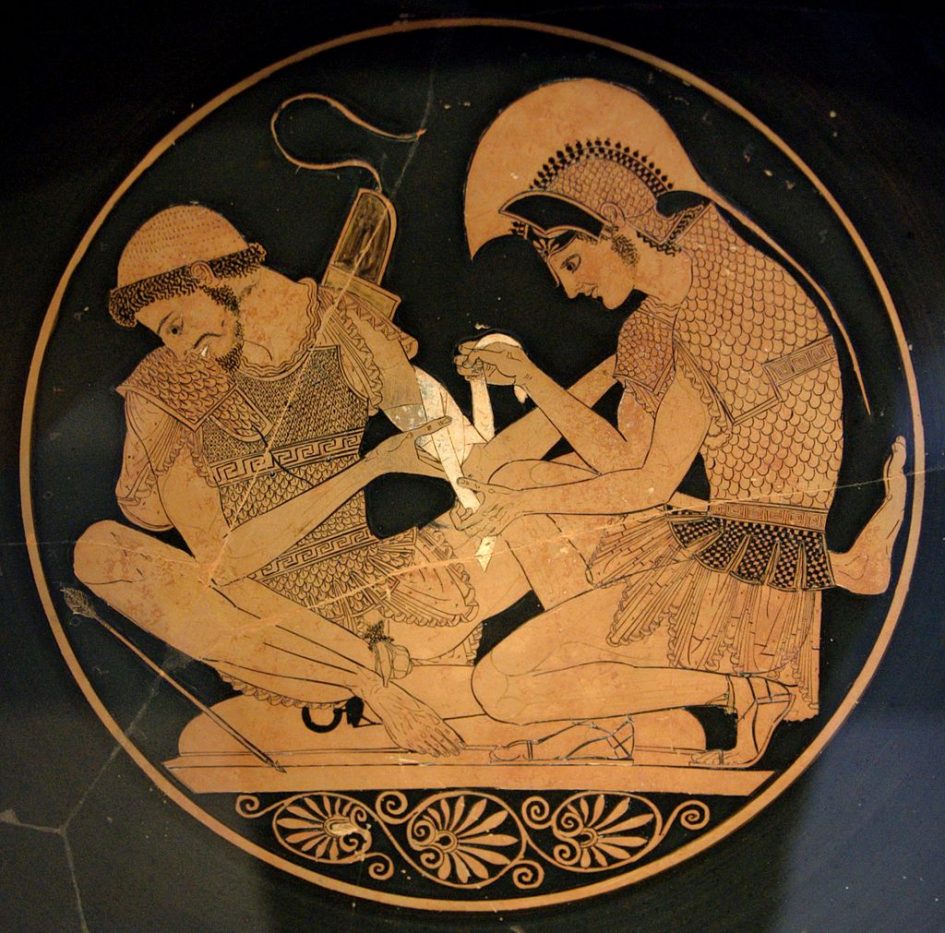
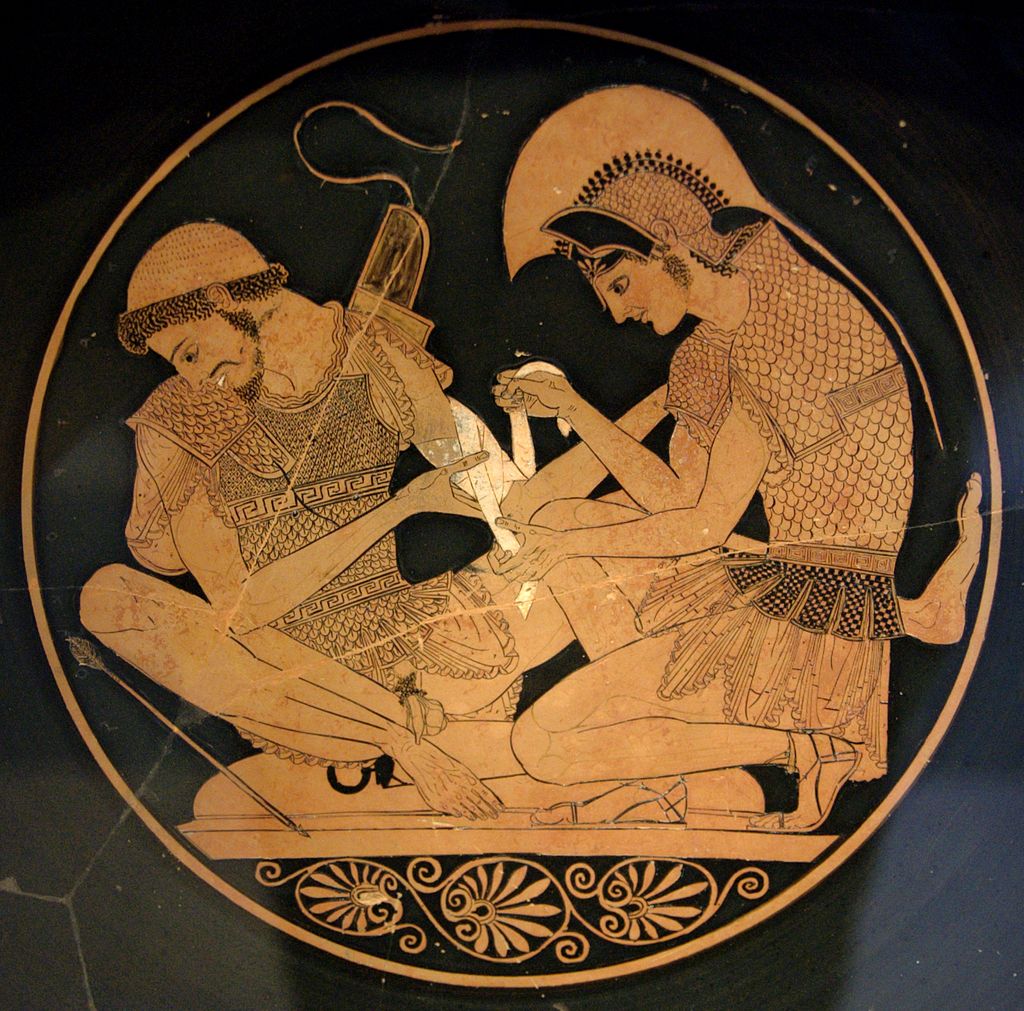
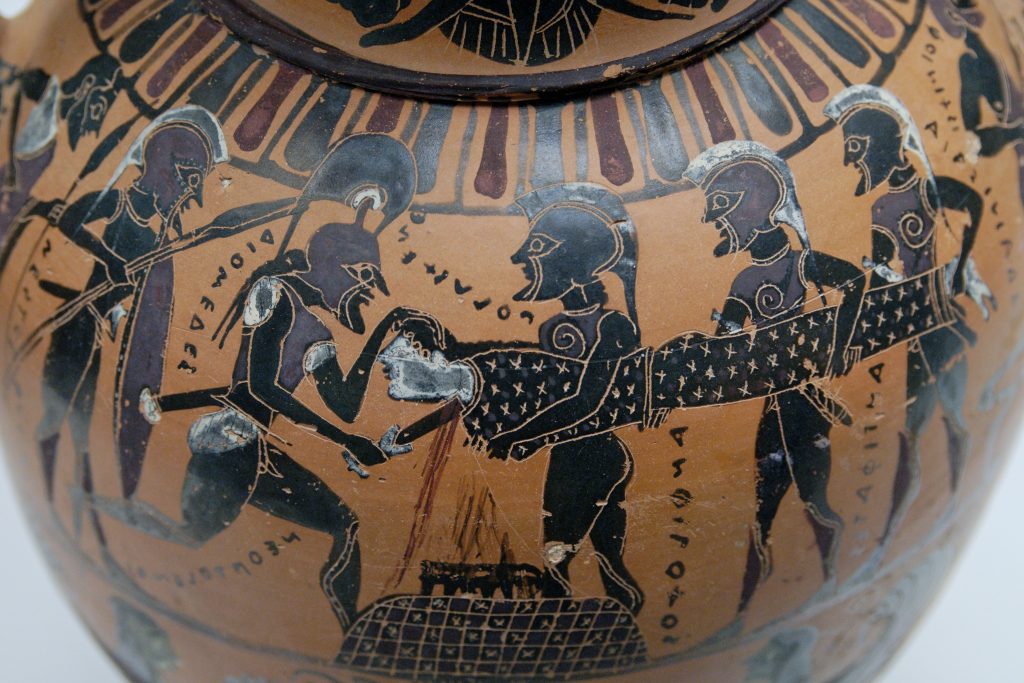
That new beginning deserved a worthy burial. One of the most lavish burials you will ever get to read about is from Homer’s Iliad and Book XXIII describes the burial of Patroclus – cousin of the famous Achilles.
I would like us to examine closely the original text itself to provide a bit of context. The interment of Patroclus starts with:
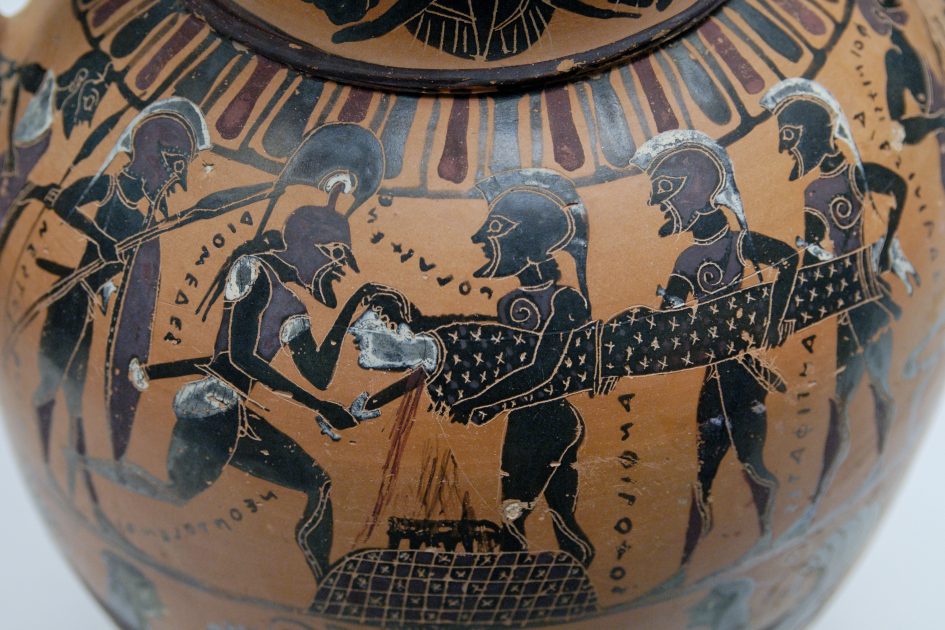
“Many sleek bulls bellowed about the knife, as they were slaughtered, many sheep and bleating goats, and many white-tusked swine, rich with fat, were stretched to singe over the flame of Hephaestus; and everywhere about the corpse, the blood ran so that one might dip cups therein.“
Iliad (23.30-34)
The sacrifice of an animal, the offering of fruits, plants, incense, or various objects is the most visible expression and manifestation of religion in the ancient world. Moreover, the psychology of sacrifice is summarized in the Latin proverb “Do ut des” – “I give so that you may give.” I cannot stress enough how important this is and in fact, with its understanding, many things about sacrificial practices, in general, will become clear. In the First Song of the Iliad we see a good example of the idea:
“Hear me, god of the silver bow, who stand over Chryse and holy Cilla, and rule mightily over Tenedos, Sminthian god, if ever I roofed over a temple to your pleasing, or if ever I burned to you fat thigh-pieces of bulls and goats, fulfill this prayer for me: let the Danaans pay for my tears by your arrows” So he spoke in prayer, and Phoebus Apollo heard him.”
Iliad (1.35 – 43)
By the way, ancient priests were often real “butchers”, experienced in killing, skinning and dismembering animals. The gods received unwanted bones and fat (practical to the end, right?) while good meat was eaten by humans. Public sacrifices bound the community, affirmed values, and added some protein to the diet. The common ancient Greek “experienced” religion only in this and no other way.
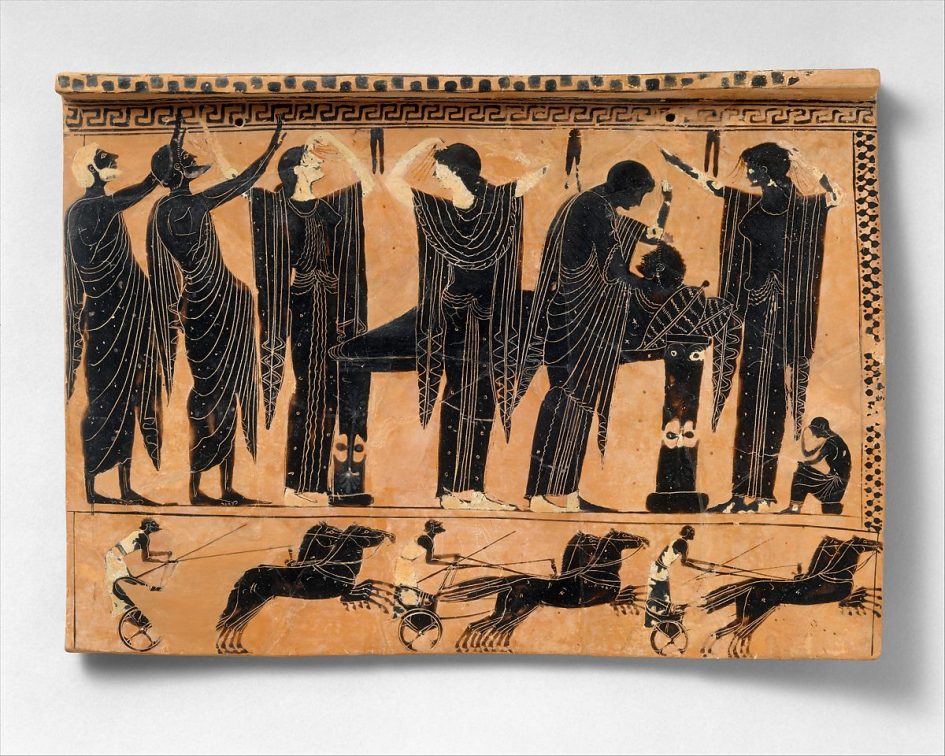
Perhaps one of the most intriguing parts of the burial ritual and the mourning itself was the cutting of the hair.
“And as with a garment they wholly covered the corpse with their hair that they shore off and cast thereon; … goodly Achilles took other counsel; he took his stand apart from the fire and shore off a golden lock…”
Iliad (23. 135-140)
This ritual associated with cutting the hair and its “burial” is rather overlooked. In Ancient Egypt, this custom was often depicted and described in many texts. Even words like “widow” and “lamentation” are written down with a determinative “lock of hair.”
Hair is actually a feature that distinguishes the individual and we can safely say that in the hair remains “a particle of the person’s individuality”. By the way, dwell on that.
“And many goodly sheep and many sleek kine of shambling gait they flayed and dressed before the pyre; and from them all great-souled Achilles gathered the fat, and enfolded the dead therein from head to foot, and about him heaped the flayed bodies. And thereon he set two-handled jars of honey and oil, leaning them against the bier; and four horses with high arched neeks he cast swiftly upon the pyre, groaning aloud the while. Nine dogs had the prince, that fed beneath his table, and of these did Achilles cut the throats of twain, and cast them upon the pyre. [175] And twelve valiant sons of the great-souled Trojans slew he with the bronze—and grim was the work he purposed in his heart and thereto he set the iron might of fire, to range at large.”
Iliad (23.169 – 176)
The sacrificial animals were oxen, sheep, goats, pigs, then four horses, nine dogs, and finally twelve Trojan boys. At Patroclus’s funeral, rams and oxen were skinned and their fat was arranged on his carcass “from head to toe,” indicating that these animals had a function other than that of pure sacrifice. The dogs and horses were not skinned and by all means, belonged to another “class” of animals. Homer does not explain their killing, but the simplest and most common understanding is that they belonged to Patroclus.
In Troy, both ordinary soldiers and noble leaders and kings were cremated. But the feasts and ceremonies, as well as the “exposition” and mourning of the corpse itself, varied according to the position and status of the deceased. Achilles was mourned for 17 days in the Odyssey (24.63-66), Patroclus’ burial was large and lavish, while those of Eethion (Iliad 6.416-419) and Elpenorus (Odyssey 12.8-15) were much more modest. The killing of the twelve Trojans can be interpreted mainly in three ways:
- Killing them was a sacrifice absolutely equivalent to animal sacrifices;
- The twelve Trojans were to serve Patroclus in the afterlife;
- Their murder was motivated entirely or largely by anger and a thirst for revenge.
Dwell on that.
Death.
Final or not, death is certain and as Benjamin Franklin has put it nicely – in this world, nothing can be said to be certain, except death and taxes.
A good reminder to pay your taxes, by the way.
Leave a Reply