Aaahh Cuba…. Great beaches, good rum, Fidel Castro, cigars, Revolution, socialism, great music, and welcoming people. If you google for example “things Cuba is famous for” you will get the idea. But as you might imagine, there is so much more to this island than its perfect beaches and “Cuba Libre” cocktails. I can assure you that the history of the island is interesting and deserves one’s attention.
Okay, since today is the 26th of July 2020, my timing couldn’t have been better to write about one other 26th of July (some 67 years ago) that would ultimately change Cuba and would start a revolution, for better or for worse. And of course, I will also address some common misconceptions that usually follow the Cuban Revolution and its relations with the Soviet Union. By the way, my Master’s thesis was on the development of the Soviet-Cuban relations from 1959 to 1991 so you can totally trust me on this blog post. But before all that … let’s start with some background information that will help us get the whole picture.
Christopher Columbus reached the island of Cuba in 1492 on his first voyage to the Americas. Apparently, he liked what he saw because he wrote “this is the most beautiful land that human eyes have ever seen, for its good port, delicious water (did he mean rum?) and plenty wood.” Fair enough.
Throughout the centuries Cuba was ruled by Spain and Britain. After the Spanish–American War, Spain and the United States signed the Treaty of Paris (1898), by which Spain ceded Puerto Rico, the Philippines, and Guam to the United States, and Cuba became a… protectorate of the United States. Remember that. It’s a plot twist.
However, Cuba gained formal independence from the U.S. on the 20th of May 1902 and finally became the Republic of Cuba. But that independence proved to be very disappointing. Why? To put it simply – the economic and political power were fully usurped by the USA – until 1959 it owned 90% of the mines, 40% of the sugar factories, and 80% of all public services. So, it turned out that the United States controlled the electricity, the telephone services, the water, and rail transportation. In fact, after World War II, the United States invested $ 657 million in Cuba, and in 1958, investments exceeded $ 1 billion in every sector of the economy.
Twenty years before the Revolution, the United States provided official support to the regime of Fulgencio Batista, the legitimately elected president since 1940. During his regime, the corruption and theft of state funds were flourishing, and the society was increasingly divided into very rich and very poor.
This is how Cuba looked before the Revolution of 1959.
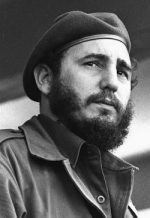
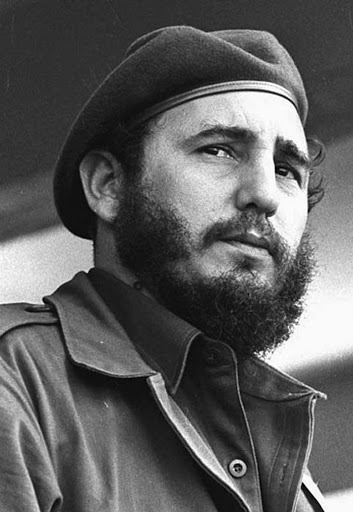
In the 1950s, various organizations competed for public support in bringing about political change. But one proved to be more important than others. It was Fidel Castro’s “26th of July” Movement that led and made the Revolution. Much can be said about Fidel but in this post, I will only mention that he left a very deep mark in Cuba after governing for half a century, almost half of the country’s 107-year history as a Republic. Interestingly, 72% of all Cubans were born at the time of his mandate and knew no other form of government.
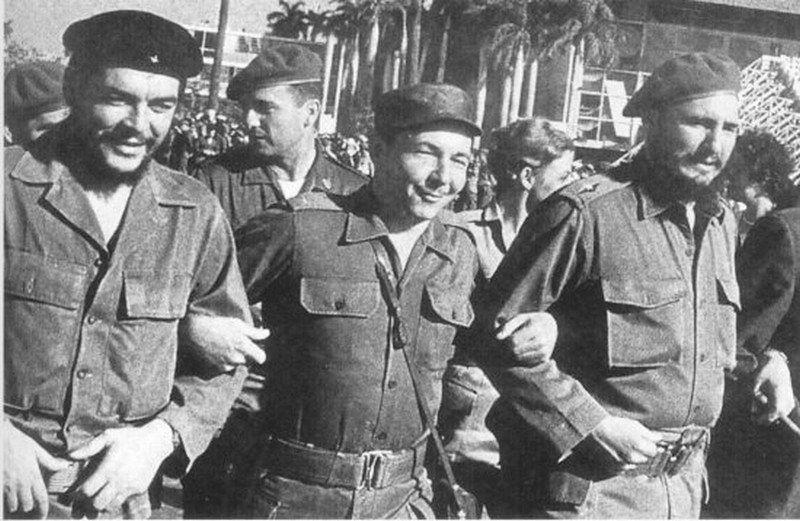
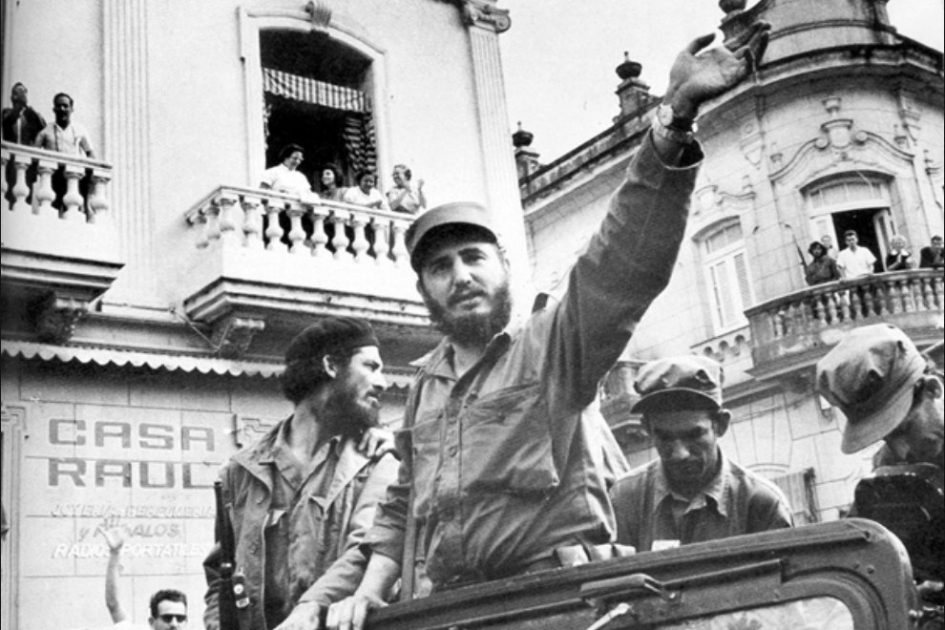
From right to left: Fidel Castro, Raul Castro (brother), and Che Guevara.
Okay, the time has come for me to spill it all out. The Soviet Union did not create, manage, lead, fight, take part (or however you might want to call it) the Cuban Revolution. Castro and his “26th of July” Movement overthrew Batista’s government and seized power. Not the communists. Sometimes people are tempted to blame it all on the USSR and sorry to break it to you but the Cuban Revolution was “the first socialist revolution that was not made by the Communist party”. Ta-da-da-dam.
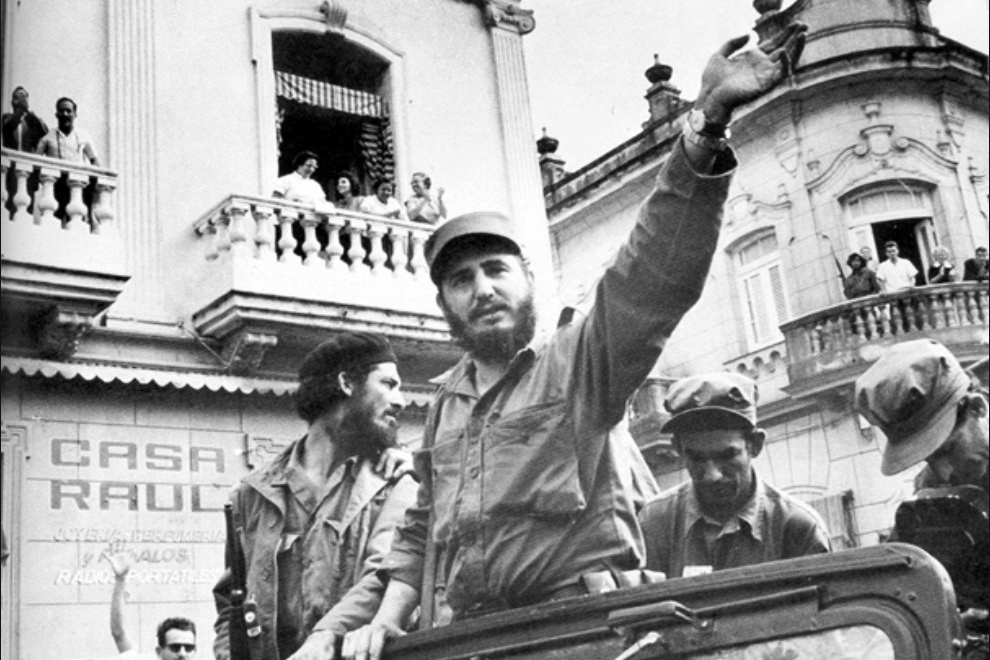
Some facts:
- The relations with the Soviet Union developed neither as soon, nor as quickly as it is often suggested.
- The first official contact between the Cuban government and the Soviet Union was established 1 year AFTER the Cuban Revolution in October 1960.
- Fidel Castro was not a communist in 1958. He was still not a communist in 1959 when the Revolution happened. Probably reconsidering in 1960. And voilà. In 1961 his mind was clear. Socialist for life, which in his case was until 2016. Check out some of his quotes at the end of the post.
- The Socialist character of the Cuban Revolution was announced on the 16th of April 1961 and it SURPRISED the Soviet Union as much as it surprised the United States. The “Wait, Seriously, Is This for Real” type of surprise. Yup, it is.
- It is possible to say that Castro made his Revolution socialist as a way for it to survive.
- Ever since the revolution Cuba almost always had its own views – different from the Soviet ones. Thus, Cuba was able to keep its uniqueness and relative independence.
- To a big extent, the Cuban revolution owns its “life” to the Soviet’s support but it is remarkable how purely “Cuban”, not Soviet, Castro’s regime was.
- Before 1970 the USSR and Latin America were, literally and figuratively, worlds apart and, except for Cuba, had few relations with one another.
- Latin America has always been a region of great importance for the United States.
One of the most striking changes since the victory of the revolution in 1959 was the achievement of almost complete literacy of the population. Today, Cuba is the country with the highest levels of literacy in the entire region. In the 60 years before that, under the previous system, only 30% of Cubans were able to read. The revolutionary government managed to overcome this problem in three years – by the end of 1962 it declared that adult literacy was 96% – this is the highest value in Latin America and one of the highest in the world. The number of primary schools increased from 7,600 to 11,200. The percentage of children between the ages of 6 and 12 attending school increased from 56% in 1953 to 88% by 1970. Great job!
Having that in mind, read this lovely anecdote from Eliseo Alberto, Cuban-born writer, novelist, essayist, and journalist:
Years ago, a Cuban fisherman seeking political asylum in the Canary Islands did not hesitate to acknowledge in an interview the achievements of the Health and Education Revolution.

Surprised, the interviewing journalist asked him why he had fled his country then, to which the fisherman replied after a short thought:

“Well, look now, comrade, the thing is that a person is not constantly ill, nor does he study forever. Was I clear enough?"
I will end with my favorite ambiguous quotes from Castro. They show the great transformation of his thought. In chronological order, of course. Ha-ha!
- “No he sido nunca ni soy comunista. Si lo fuese, tendría valor suficiente para proclamarlo” (mayo de 1958).
- “No soy comunista” (Nueva York, abril de 1959)
- “Soy marxista-leninista y seré marxista-leninista hasta el último día de mi vida” (1 de diciembre de 1961).
Leave a Reply