Are you fascinated by all things beautiful? Or perhaps you are just curious to know when and why people started adorning their mortal bodies?
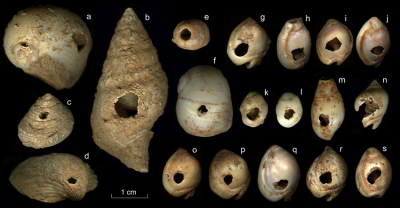
The use of jewelry made from shells, stones, and bones can be traced back to the long-gone prehistoric times – some historians suppose even as early as 100.000 B.C. with the not-so-famous two shell beads that were found in Skhul Cave in Israel. It has been suggested that these ancient beads were most likely strung together and worn as a necklace, bracelet, or another form of adornment. The shells are currently at the London Natural History Museum in England.
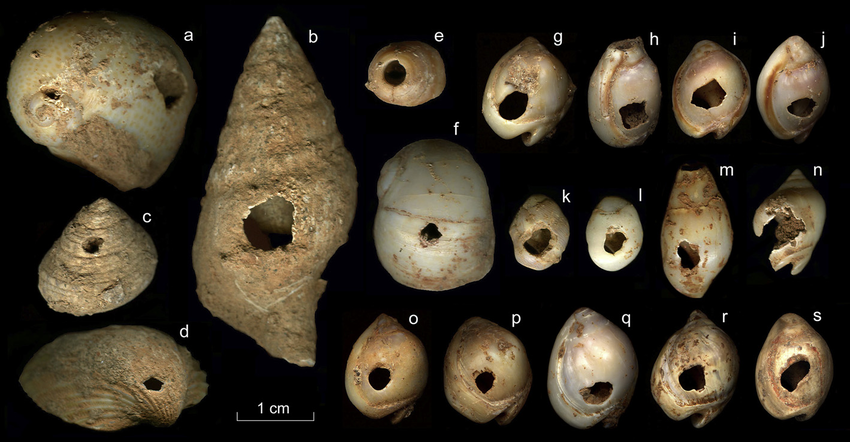
Before precious metals were discovered, people who lived along the seashore decorated themselves with a great variety of shells, fishbones, fish teeth, and colored pebbles. People who lived inland made ornaments from materials taken from the animals they had killed for food. This era was followed by one that saw a transition from a nomadic life to a settled social order and the subsequent birth of the most ancient civilizations.
It is most likely that from an early date jewelry was worn as amulets for protection or as a mark of status and rank. Moreover, it must be stressed here that in the ancient world jewelry had not only a decorative function but also served a symbolic purpose.
Have a look at some of the most intriguing and beautiful jewelry, according to my pretentious taste, no doubt.
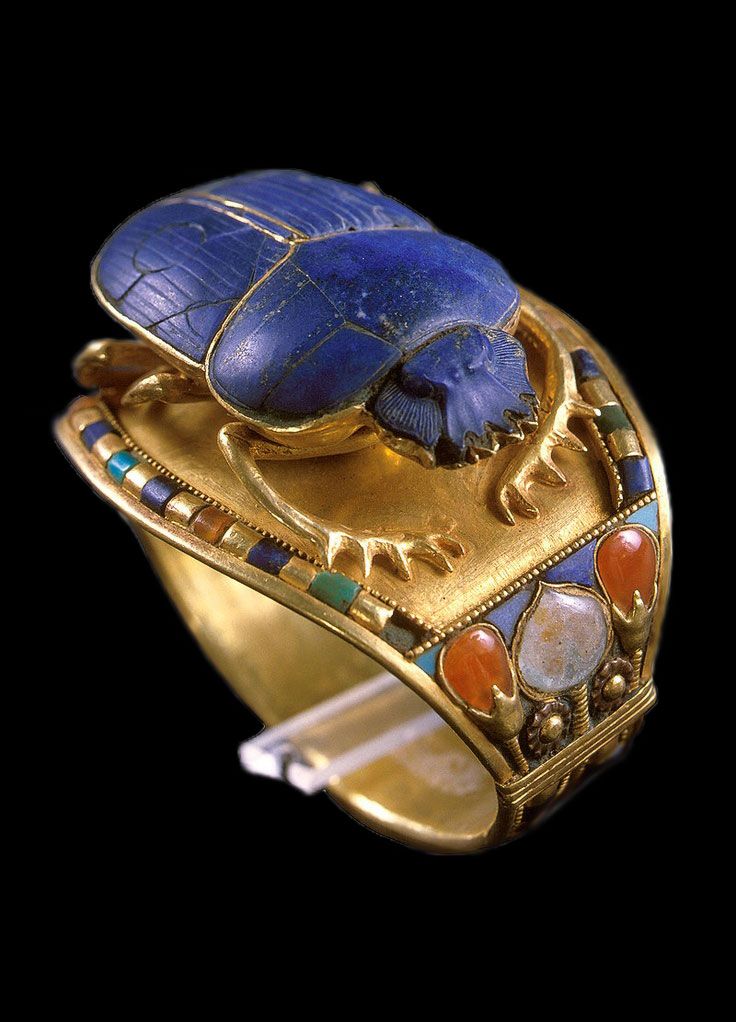
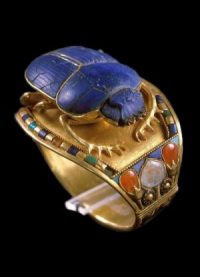
This piece has always been one of my favorites. Simply exquisite. It has to be noted that in the Ancient Egyptian religion, the scarab beetle was a symbol of immortality, resurrection, transformation, protection, and was often used in funerary art. Much can be said about the great treasures of King Tut. There is a great hall in the Museum of Egyptian Antiquities in Cairo dedicated to the king and you can have a virtual walk here. The new Grand Egyptian Museum is now scheduled to open in 2021 due to the COVID-19 pandemic and it will house the largest collection of Tutankhamen relics ever displayed. Did I mention that I can’t wait to lose myself there? And just so you know, it is said to be the largest archaeological museum in the world!
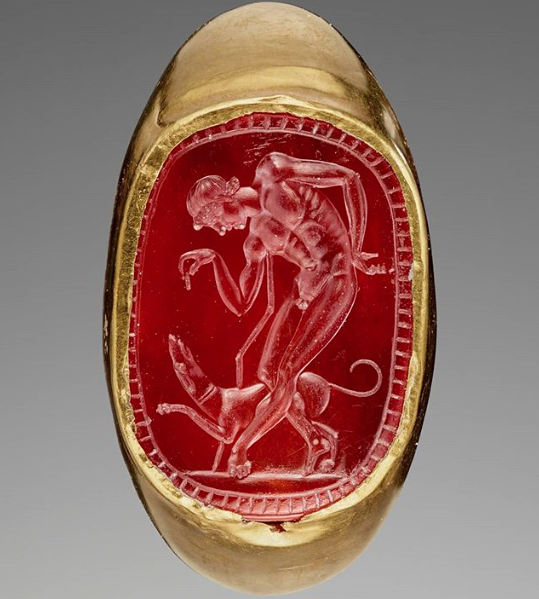
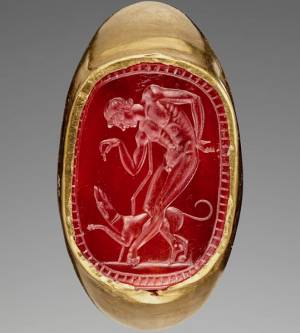
(Circa 2nd or 3rd century)
In case you didn’t know, ancient people cared a lot for their dogs. They were very dear to them and we have many sources to prove it. In fact, Romans not only depicted them in their jewelry but also made graves for them with personal epitaphs. You can read some of them here:
“I am in tears while carrying you to your last resting place as much as I rejoiced when bringing you home in my own hands fifteen years ago.”
“My eyes were wet with tears, our little dog, when I bore thee (to the grave)… So, Patricus, never again shall thou give me a thousand kisses. Never canst thou be contentedly in my lap. In sadness have I buried thee, and thou deservist. In a resting place of marble, I have put thee for all time by the side of my shade. In thy qualities, sagacious thou wert like a human being. Ah, me! What a loved companion have we lost!”
“This is the tomb of the dog, Stephanos, who perished, Whom Rhodope shed tears for and buried like a human. I am the dog Stephanos, and Rhodope set up a tomb for me.”
“[Myia] never barked without reason, but now he is silent.”
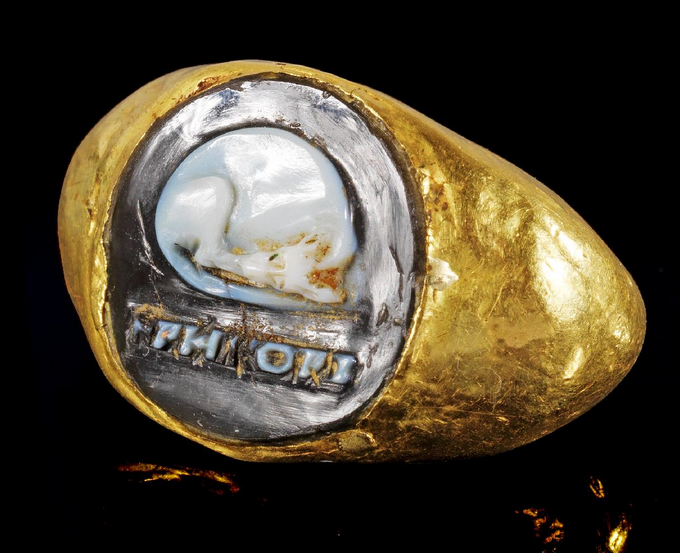
People have been mourning over their deceased animals for much of recorded history and I am confident that will continue to do so until the very end of existence.
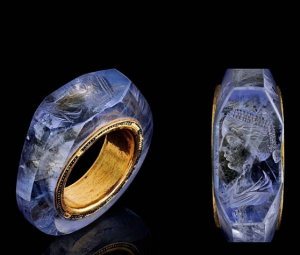
Our next piece of jewelry is yet another ring but this time very special – an exquisite 2,000-year-old sapphire ring which is thought to have belonged to Roman Emperor Caligula, who reigned from A.D. 37 until his assassination four years later.
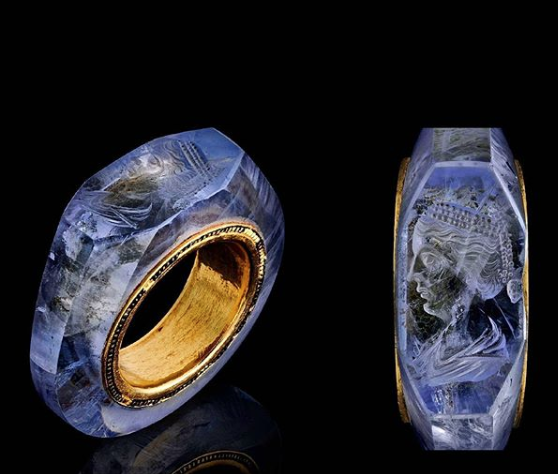
The ring was made from a single piece of sapphire and is being sold by royal jewelers Wartski, best known as the foremost dealers and experts in the Fabergé Imperial Eggs for close to £500,000. I would say that it is priceless and no finger deserves its splendour.
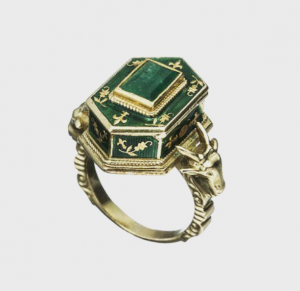
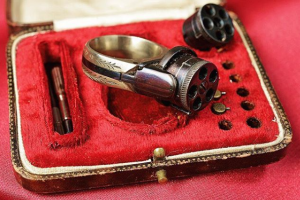
The next two rings are neither that old nor that precious but equally as intriguing for they both have a very practical function. Both can do harm and are somewhat dangerous.
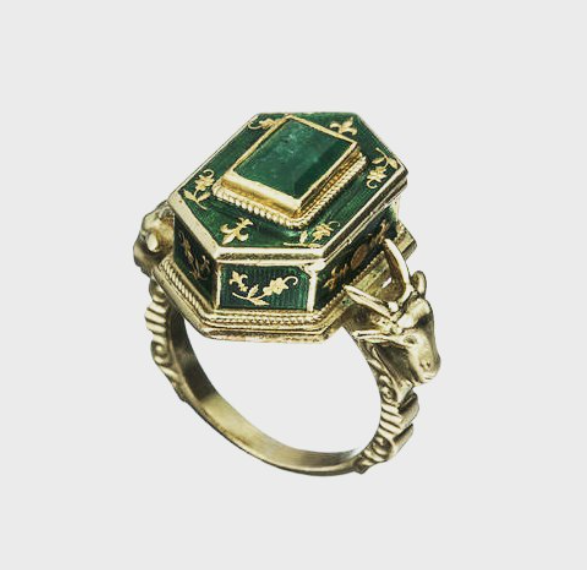
Poison rings are so named because they were supposedly used either to slip poison into an enemy’s food or drink, or to facilitate the suicide of the wearer in order to escape capture or torture. However, rings like this have been used throughout history to carry perfume, locks of hair, devotional relics, messages, and other keepsakes. Lucrezia Borgia, the illegitimate daughter of Pope Alexander VI, is often rumored to have owned and used a poison ring during the 16th century.
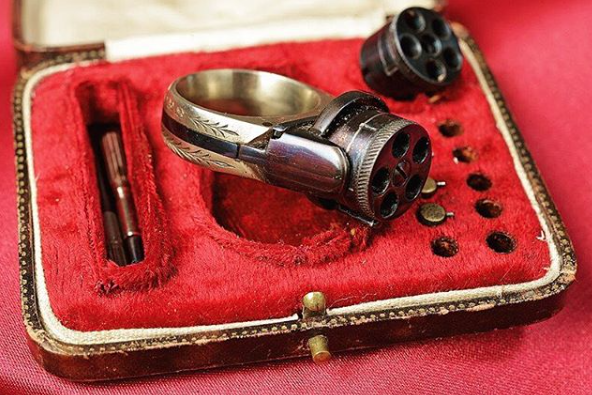
Typically worn by Victorian women for added protection when traveling alone. Although small, the gun could do some damage at close range, especially if aimed at the attacker’s eyes. These guns are very collectable and can cost as much as $11K in auction.
Leave a Reply